8th House in Eastern Astrology (Ayu Bhava): Longevity, Transformation & Hidden Gains
Contents
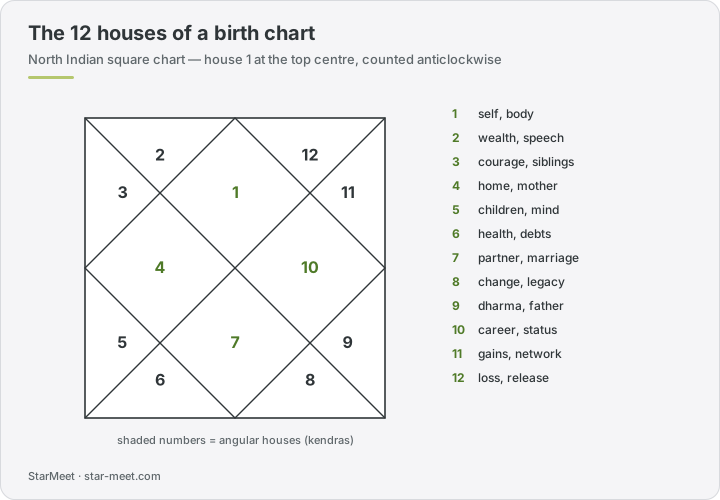
The 8th house in Eastern astrology (also called Vedic astrology, or Jyotish) — Ayu Bhava — governs longevity, death, transformation, hidden wealth, inheritance, chronic illness, surgery, and occult knowledge. Ruled by Scorpio in the natural zodiac, it is the most mystically intense house in the chart — where profound crisis gives way to equally profound regeneration.
The 8th house holds a singular position in the entire birth chart: it is simultaneously feared and revered, avoided and sought. No other house carries so many contradictions. It is the house of death — and the house of longevity. The house of crisis — and the house of transformation. The house of secrets — and the house of occult mastery. The house where inheritance arrives — and where fortunes are lost.
This is Ayu Bhava — the house of lifespan. Also called Randhra Bhava (the house of apertures/vulnerabilities), Mrityu Bhava (the house of death), and Nidhana Bhava (the house of finality). Classical texts devote more chapters to the 8th house than any other, because understanding it correctly requires dismantling several fundamental misconceptions.
This complete guide draws from Brihat Parashara Hora Shastra (BPHS) (Chapters 9, 11, 24, 43, 44), B.V. Raman's How to Judge a Horoscope (Vol. 1 & 2) and Muhurtha, P.V.R. Narasimha Rao's lecture series (1–3, 90–95, 114–131), K.S. Charak's classical texts, and Jatakalankara.
Discover your 8th house placements →
Quick Answer: The 8th house in Eastern Astrology (Ayu Bhava) governs longevity, sudden transformation, inheritance, and occult knowledge. Despite being called the "house of death," it is actually the primary longevity indicator — the 2nd and 7th houses trigger death timing. Saturn placed here gives long life. Use the free StarMeet birth chart calculator to see your 8th house placements and planetary influences.
Key Takeaways
- The 8th house is Ayu Bhava — the primary house of longevity, not just death; the 2nd and 7th houses (Maraka houses) are the actual death-triggers
- Saturn in the 8th house gives long life despite hardships — a rare exception to the Karako Bhava Nashaya rule and one of the most misunderstood placements in Jyotish
- The Maraka paradox: the 12th from the 8th = the 7th house, so the "death house" actually points to the Maraka houses for timing death
- The 8th governs three types of wealth: inheritance, insurance/compensation, and hidden family resources — all forms of money received through transformation or loss
- Trika medical distinction: 6th house = chronic illness; 8th = acute/surgical crisis; 12th = hospitalization — confusing these three leads to fundamental misreading
- 22nd Drekkana (Khara) + 64th Navamsha are the two most critical timing points for 8th house crises; Saturn or Rahu transiting these degrees activates major events
- The 8th house is the foundation of Tantra, Kundalini, and occult science in Jyotish — it governs all hidden knowledge that transforms consciousness through confrontation with death
What Is Ayu Bhava? Sanskrit Names, Classification, and the Moksha Trikona
Sanskrit Names of the 8th House: A Complete Glossary
The 8th house carries more Sanskrit names than any other house in classical texts — each revealing a different facet of its paradoxical nature:
| Sanskrit Name | Translation | Core Meaning | Classical Source |
|---|---|---|---|
| Ayu / Ayus | Lifespan, Longevity | The primary house governing the duration of life | BPHS Ch. 43 |
| Randhra | Aperture, Hole, Vulnerability | The weak point in any system; where things break | BPHS Ch. 11 |
| Mrityu | Death | The end of the physical incarnation | BPHS Ch. 9 |
| Nidhana | Finality, End | The definitive conclusion of earthly experiences | Jatakalankara |
| Chhidra | Gap, Fissure, Break | Sudden ruptures in continuous experience | Classical texts |
| Yaamya | Of Yama (God of Death) | Domain of Yama, the lord of dharmic judgment | Parashara |
| Layapada | Foundation of Dissolution | Where form dissolves back into formlessness | Jatakalankara |
| Ashtama | The Eighth | Positional name emphasizing its placement | All sources |
The name Randhra — "aperture" or "vulnerable point" — is particularly significant. Every system has a weak point: the joint in armor, the flaw in the plan, the Achilles heel. The 8th house represents that vulnerability in the native's life — the place where external forces can enter and create transformation, whether wanted or not.
The Moksha Trikona (4-8-12): The Triangle of Liberation
In classical Jyotish, the 12 houses are organized into four trikonas based on the Purusharthas (life goals):
- Dharma Trikona (1-5-9): Purpose, righteousness, spiritual evolution
- Artha Trikona (2-6-10): Material resources, effort, career
- Kama Trikona (3-7-11): Desires, relationships, social fulfillment
- Moksha Trikona (4-8-12): Liberation, transcendence, dissolution of the ego
The 4th-8th-12th triangle governs the arc from comfort to effort to liberation. P.V.R. Narasimha Rao teaches: "The 4th house gives comfort and emotional security; the 8th demands effort, crisis, and transformation; the 12th delivers liberation — release from all earthly attachments." This is why all three houses are Dusthanas (houses of suffering) and yet simultaneously gateways to the highest spiritual development.
Why the 8th Is a Dusthana: The 6-8-12 Trika Group
| House | Primary Domain | Nature of Challenge | What It Ultimately Destroys |
|---|---|---|---|
| 6th | Enemies, disease, debts | Chronic, gradual wear | The ego's comfort and security |
| 8th | Death, transformation, occult | Sudden, total rupture | The sense of control and permanence |
| 12th | Loss, isolation, liberation | Dissolving, invisible | The attachment to physical existence |
The Dusthana houses form the "shadow curriculum" of the birth chart — the lessons that cannot be bypassed, only embraced or resisted.
Natural Significators: Saturn (Ayushkaraka) and Mars
Saturn is the primary Ayushkaraka — the natural significator of longevity. Saturn rules time, endurance, destiny, and the slow unfolding of consequences. Saturn in a strong position in the 8th house (its "functional ally" zone, though not its own sign) significantly supports longevity.
Mars is the co-significator, governing the 8th house themes of surgery, accidents, acute trauma, hidden energy (Kundalini), and the transformative cutting-away of old forms.
The Bhavat Bhavam Principle and the Maraka Paradox
The Bhavat Bhavam principle states that the Nth house from any house describes that house's own nature more deeply. Applied to the 8th house:
- The 8th from the 8th = 3rd house — explaining why the 3rd house (longevity partner of the 8th) is also a minor lifespan indicator
- The 12th from the 8th = 7th house — revealing the Maraka mechanism: the 7th house is 12th from the 8th (the house of loss applied to longevity), making it a primary death-trigger
"In Eastern Astrology, the 8th house is simultaneously the house of longevity (Ayu) and the gateway to Maraka energy — a paradox resolved by the Bhavat Bhavam principle: the 2nd and 7th houses kill, while the 8th actually preserves life." — BPHS / StarMeet
This is why B.V. Raman states: "The 8th lord, being the Ayushkaraka, should not be confused with the Maraka lords of the 2nd and 7th houses." The 8th house contains life; the 2nd and 7th terminate it.
8th House Lord for All 12 Lagnas
| Lagna | 8th Lord | Also Rules | Special Note |
|---|---|---|---|
| Aries | Mars | 1st house | 8th lord = Lagna lord; complex double role |
| Taurus | Jupiter | 11th house | Benefic lord; 8th + 11th: occult gains |
| Gemini | Saturn | 9th house | Natural Ayushkaraka; 8th + 9th: transformation through dharma |
| Cancer | Saturn | 7th house (Maraka!) | Saturn lords both 7th (Maraka) and 8th |
| Leo | Jupiter | 5th house | Benefic; 8th + 5th: creative transformation |
| Virgo | Mars | 3rd house | 8th lord also governs initiatives/siblings |
| Libra | Venus | 1st house (Lagna lord!) | Venus lords Lagna + 8th; life = transformation |
| Scorpio | Mercury | 11th house | Mercury lords 8th + 11th; occult income |
| Sagittarius | Moon | — | Luminary as 8th lord; emotional transformations |
| Capricorn | Sun | — | Luminary as 8th lord; ego-death as teacher |
| Aquarius | Mercury | 5th house | Mercury lords 5th + 8th; hidden creative power |
| Pisces | Venus | 3rd house | Venus lords 3rd + 8th; beautiful transformations |
Ayu: Longevity, Life Span, and the Ayushkaraka Planets
Three Life Span Groups: Alpayu, Madhyayu, and Purnaayu
BPHS Chapter 43 establishes three fundamental longevity categories based on the position and strength of key planets:
| Group | Sanskrit | Years (Classical) | Key Conditions | Yoga Examples |
|---|---|---|---|---|
| Short Life | Alpayu | 0–32 years | 8th lord severely afflicted; Lagna lord weak; multiple Arishtha yogas | Balarishtha: Moon in 6/8/12 without benefic aspect |
| Medium Life | Madhyayu | 32–75 years | Moderate 8th lord; mixed Ayushkarakas | Standard placement; most charts fall here |
| Full Life | Purnaayu | 75–120 years | Saturn strong in 8th; Jupiter strong; Dirghayu yogas present | Saturn in 8th from Lagna; strong Ayushkarakas |
How to Determine Life Span: The Three-Pair Method (BPHS Ch. 43)
BPHS presents a systematic method for categorizing longevity using three paired signs:
- Pair 1 (Chara/Movable signs): The Lagna and the 8th house sign — if both are in movable signs (Aries, Cancer, Libra, Capricorn), one indicator; if mixed, another
- Pair 2 (Sthira/Fixed signs): The same calculation applied to fixed signs (Taurus, Leo, Scorpio, Aquarius)
- Pair 3 (Dvi-svabhava/Dual signs): Applied to dual signs (Gemini, Virgo, Sagittarius, Pisces)
The majority result across three pairs determines the longevity category. This is a simplified overview — the full algorithm requires careful sign-by-sign analysis of both the Lagna and the 8th house sign positions.
Saturn: The Supreme Ayushkaraka and Its Exception Rule
"According to P.V.R. Narasimha Rao, Saturn in the 8th house is a rare exception to the Karako Bhava Nashaya rule — rather than destroying the house, Saturn here gives a long life, albeit filled with hardships and sudden crises." — P.V.R. Narasimha Rao / StarMeet
The Karako Bhava Nashaya rule states that the natural significator of a house, when placed in that house, tends to harm the house's results. Saturn is the natural significator of longevity (Ayushkaraka). By the rule, Saturn in the 8th should weaken longevity — yet classical texts universally confirm the opposite.
Why the exception? Saturn is also the lord of discipline, endurance, destiny, and time itself. In the 8th house — the house Saturn naturally governs through its significations — Saturn concentrates its temporal power rather than dissipating it. The result: long life, but a life filled with periodic crises, losses, and soul-purpose weight.
Jupiter as Co-Ayushkaraka: The Sanjeevani Effect
Jupiter, the planet of expansion, wisdom, and grace, acts as the secondary Ayushkaraka. Jupiter in the 1st, 5th, or 9th house especially supports longevity. When Jupiter aspects the Lagna, 8th house, or its lord from a strong position, it acts like the mythological Sanjeevani herb — reviving and sustaining life force even in the presence of significant afflictions.
Three Mathematical Methods for Calculating Life Span
Classical texts present three distinct mathematical systems for calculating lifespan:
| Method | Sanskrit | Used When | Key Variables | Limitations |
|---|---|---|---|---|
| Pindayu | Pinḍāyu | Primary method; most commonly used | Each planet assigned years based on sign placement | Doesn't account for Dasha timing |
| Naisargayu | Naisargāyu | Secondary; based on natural lifespan allotments | Fixed years per planet: Sun=19, Moon=25, etc. | Highly simplified; rarely used alone |
| Amsayu | Aṃśāyu | When first two are inconclusive | Based on Navamsha degrees gained by each planet | Most complex; requires precise birth data |
P.V.R. Narasimha Rao teaches that these methods should be used together — if all three point to the same longevity category (short, medium, or full), the prediction is reliable. When they diverge, the chart requires deeper analysis of the Ayushkarakas and Maraka planets.
Maraka Planets: Why the 2nd and 7th Houses Kill
Maraka planets (death-inflicting planets) are the lords of the 2nd and 7th houses, plus planets placed in or aspecting these houses. The mechanism:
- 2nd house: 12th from the 3rd (longevity's partner) — it removes the support of the 3rd house's sustaining function
- 7th house: 12th from the 8th (longevity itself) — it directly removes the 8th house's life-sustaining function
During the Dasha-Antardasha of Maraka planets, particularly when transit also supports the timing, the native may experience major health crises or death depending on the Ayu category already established. A person in Alpayu may actually die during Maraka Dasha; a person in Purnaayu will experience a serious but survivable health crisis.
Timing Death: Dasha-Bhukti, 22nd Drekkana, and 64th Navamsha
Classical texts identify several timing mechanisms for 8th house events:
- Dasha-Antardasha: The primary trigger — Maraka lords, 8th lord, and planets in the 8th or 2nd/7th houses
- 22nd Drekkana (Khara): Calculated from the Ascendant's Drekkana position; transits of Saturn or Rahu over this degree activate crises
- 64th Navamsha from Moon: Transit of Saturn or Rahu over the 64th Navamsha from the natal Moon position — another critical activation point
- Double Transit (Guru-Shani): B.V. Raman's rule that significant 8th house events require both Jupiter and Saturn to simultaneously transit sensitive points
"The 22nd Drekkana from the Ascendant (called Khara — the 'dangerous one') and the 64th Navamsha from the Moon are the two most critical timing triggers for 8th house events: transits of Saturn or Rahu over these sensitive points activate crises." — B.V. Raman / StarMeet
Longevity Yogas: Classical Combinations
Dirghayu (Long Life) Combinations:
- Saturn in the 8th from Lagna
- Jupiter in Lagna aspecting 8th
- Strong Lagna lord in an angle or trine
- Arishtha Bhanga (cancellation of death combinations) present
Alpayu / Balarishtha (Short Life / Early Death) Combinations:
- Moon in 6th, 8th, or 12th without benefic aspect
- Afflicted Lagna lord; weak 8th lord
- Malefics in Lagna without benefic aspect
Balarishtha Bhanga (Cancellation):
"Balarishtha yoga (early death combination) is formed by an afflicted Moon in the 6th, 8th, or 12th house without benefic aspect — yet a strong, exalted Jupiter in the Ascendant cancels all Arishtha combinations, acting like a lion dispersing a herd of elephants." — BPHS / StarMeet
The classic BPHS verse states that a strong Jupiter in the 1st house cancels all Arishtha yogas (combinations for early death or suffering) — the simha (lion) metaphor captures how Jupiter's grace overwhelms the scattered afflictions.
Hidden Wealth, Inheritance, and Other People's Money
8th House as the Treasury of Others
The 8th house governs wealth that arrives through transformation, loss, and the resources of other people. This is the Bhavat Bhavam principle at work: the 8th is the 2nd house from the 7th (partner's wealth), the 4th from the 5th (resources through children), and the 12th from the 9th (expenses of the father/guru). Every resource that flows to you through someone else's loss, death, or generosity carries 8th house energy.
Financial Types Governed by the 8th House
| Financial Type | Primary House | Supporting House | Key Condition |
|---|---|---|---|
| Inheritance from spouse | 8th | 7th, 4th | 8th lord strong; benefic in 8th |
| Life insurance payout | 8th | 2nd | Saturn or Venus in 8th |
| Inheritance from parents | 4th (mother), 9th (father) | 8th | 8th connected to 4th/9th lord |
| Government compensation | 8th | 10th, 6th | 8th lord in angular house |
| Hidden/undisclosed assets | 8th | 12th | Planets in 8th; 8th lord in 12th |
| Loans (money you use but don't own) | 6th | 8th, 11th | 6th-8th axis activated |
| Windfall/unexpected gains | 8th | 5th, 11th | Benefics in 8th; Jupiter aspect |
"The 8th house governs three distinct financial themes: inheritance from family (through the 2nd from 7th principle), insurance and compensation, and hidden resources — all forms of wealth that arrive through someone else's loss or death." — B.V. Raman / StarMeet
Inheritance: The Three Sources
From the Father: The 9th house governs the father. The 8th from the 9th = the 4th house (property, fixed assets). Inheritance from the father therefore primarily involves the 4th and 9th houses, with the 8th as the mechanism of transfer.
From the Mother: The 4th house governs the mother. The 8th from the 4th = the 11th house (gains, income, elder siblings). Maternal inheritance often manifests through the 11th house axis.
From the Spouse/Partner: The 7th house governs the spouse. The 8th from the 7th = the 2nd house (family wealth). The 8th house itself is the direct inheritance from the spouse — their assets, their family's resources, their financial legacy.
All 9 Planets in the 8th House: Financial Dimension
| Planet | Financial Theme | Risk | Opportunity |
|---|---|---|---|
| Sun | Inheritance from father/government | Father's health may decline | Authority role in managing estates |
| Moon | Maternal inheritance; fluctuating hidden wealth | Emotional spending of inherited money | Strong intuition about others' resources |
| Mars | Partner's wealth; property through crisis | Disputes over inheritance; legal battles | Ability to manage others' assets decisively |
| Mercury | Trading others' money; financial cleverness | Contracts and legal disputes over inheritance | Skill in investment banking, insurance |
| Jupiter | Large inheritance; generosity of others | Others may rely on you financially | Dhana Yogas through spouse/legacy |
| Venus | Partner's luxury resources; artistic inheritance | Financial dependency on partner | Gains through creative or artistic estates |
| Saturn | Slow but substantial inheritance; delayed gains | Delayed inheritance; legal obstacles | Long-term wealth building through others' assets |
| Rahu | Unusual, foreign, or unconventional inheritance | Disputed or unclear inheritance | Gain through foreign property or unusual sources |
| Ketu | Spiritual or ancestral wealth; minimal material gain | Detachment from inherited wealth | Past-life resources; healing through ancestors |
Dhana Yogas Through the 8th House
When the 8th lord exchanges signs with or conjoins the lords of the 2nd, 5th, or 11th house (the Dhana/wealth houses), specific Dhana Yogas arise. These yogas indicate substantial wealth arriving through the 8th house's channels: inheritance, insurance, partner's resources, or hidden assets. B.V. Raman documents several such combinations in natal charts of wealthy individuals whose fortunes derived primarily from legacy, investment, or other people's money.
Sexuality, Tantra, Kundalini, and Transformation
7th vs. 8th House: The Classical Distinction
The 7th and 8th houses are neighbors, yet they govern entirely different dimensions of relationship:
| House | Governs | Quality | Visibility |
|---|---|---|---|
| 7th | Marriage contract, public partnership, legal union | Social, formal, witnessed | Public |
| 8th | Intimacy, sexual union, emotional merger | Private, taboo, unwitnessed | Hidden |
P.V.R. Narasimha Rao teaches: "The 7th house governs the contract of marriage — what is publicly acknowledged and legally binding. The 8th house governs what happens after the door closes — the private, intimate, transformative aspect of union."
All 9 Planets in the 8th: Sexual and Psychological Patterns
| Planet | Partner/Sexual Dynamic | Psychological Shadow | Transformation Path |
|---|---|---|---|
| Sun | Dominance; needs to be the center of intimacy | Fear of vulnerability; ego-protection | Learning surrender through intimacy |
| Moon | Deep emotional merger; mother-archetype attraction | Fear of abandonment; emotional dependency | Unconditional love through the wound |
| Mars | Intense, passionate, possessive | Jealousy; control; anger under suppression | Channeling Mars energy into Kundalini |
| Mercury | Analytical intimacy; communication-driven sexuality | Intellectualizing feelings to avoid them | Integrating mind and body through the 8th |
| Jupiter | Philosophical, expansive, generous intimacy | Spiritual bypassing of shadows | Wisdom through confronting taboos |
| Venus | Luxurious, sensual, seeking beauty in depth | Fear of ugliness and raw reality | True beauty found in shadow work |
| Saturn | Controlled, soul-purpose, delayed intimacy | Sexual repression or soul-purpose debts | Liberation through acceptance of limitation |
| Rahu | Obsessive, boundary-crossing, taboo | Compulsive patterns; addiction to intensity | Conscious engagement with the forbidden |
| Ketu | Detached, spiritual, past-life residue | Dis-interest; spiritual escapism from intimacy | Past-life mastery made conscious |
Tantra and the 8th House: Kama to Moksha via Kundalini
The 8th house is the classical seat of Tantra in Jyotish — the philosophy and practice of using desire, death-awareness, and taboo as pathways to liberation rather than obstacles to it.
The 8th house governs:
- Kundalini energy — the coiled serpent power at the base of the spine (Muladhara connection through Scorpio and Ketu)
- Tantric practices — using the body and its vital energies as instruments of consciousness expansion
- Transformation through confrontation — the Shiva principle: destroy what is false to reveal what is true
"Tantra, occult sciences, and Kundalini awakening are natural 8th house themes in Jyotish — the 8th house rules all forms of hidden knowledge that transform consciousness through confronting taboo, death, and the primal life force." — P.V.R. Narasimha Rao / StarMeet
Ashtama Shani Transit: The Great Soul-purpose Test
Ashtama Shani refers to Saturn's transit through the 8th house from the natal Moon. This approximately 2.5-year period is one of the most challenging cycles in Eastern Astrology, associated with:
- Sudden disruptions to career, health, and relationships
- Financial losses or unexpected expenses
- Physical strain, chronic fatigue, or health concerns
- Isolation, depression, or deep psychological work
- Confrontation with mortality (of self, family members, or close friends)
Yet P.V.R. Narasimha Rao and B.V. Raman both emphasize: Ashtama Shani is not a curse but a soul-purpose audit. Saturn reveals what is structurally unsound in the native's life and forces a reckoning. Those who use this period for genuine self-examination, spiritual practice, and course-correction often emerge transformed and strengthened.
Key insight: Ashtama Shani's severity depends heavily on Saturn's natal dignity, the strength of the natal Moon, and how well the native has maintained Saturnian virtues (discipline, honesty, responsibility) in preceding years.
Occult Sciences, Hidden Knowledge, and Past Lives
The 8th House as the Foundation of Occult Knowledge
Classical Jyotish assigns the 8th house as the primary house of all hidden knowledge — sciences and arts that operate beneath the surface of ordinary perception:
- Astrology (Jyotish) — particularly the predictive and timing aspects
- Numerology, palmistry, face-reading — hidden pattern recognition
- Tantra and Mantra shastra — science of sacred sound and energy
- Hypnosis and subliminal influence — accessing the subconscious
- Investigation and research — uncovering hidden truth
- Surgery and autopsy — literal penetration beneath the surface
The 8th house governs knowledge that requires going beneath the visible surface of reality — where most people stop looking.
Ketu in 8th: Past-Life Occult Mastery
Ketu in the 8th house is the classical indicator of occult mastery in a previous lifetime. The native typically comes with innate, inexplicable understanding of Jyotish, Tantra, healing, or mediumship. There is often a natural detachment from the fear of death — having encountered it many times before in past lives. The shadow: using these abilities to escape present-life challenges rather than engaging them.
Rahu in 8th: Obsession with the Forbidden
Rahu in the 8th house creates an intense, sometimes compulsive fascination with the occult, sexuality, taboo, and hidden knowledge. Unlike Ketu's past-life comfort, Rahu's desire is hungry and unfulfilled — seeking secret knowledge, hidden power, and transformation experiences with an almost addictive quality. Rahu in the 8th can produce extraordinary research abilities, investigative skill, or occult talent — but also obsession, paranoia, and entanglement with dark forces if the native lacks discrimination.
The Three Professions of the 8th House
| Profession | Key 8th House Combinations | Supporting Houses | Notes |
|---|---|---|---|
| Surgeon / Physician | Mars in 8th; 8th lord with Mars | 6th, 10th | Mars as cosmic surgeon; cutting to heal |
| Detective / Investigator | Saturn/Rahu in 8th; Mercury 8th connection | 3rd, 10th | Penetrating beneath appearances |
| Astrologer / Occultist | Ketu in 8th; 8th lord with Jupiter | 9th, 5th | Past-life knowledge made available again |
| Researcher / Scientist | Mercury-Saturn 8th combination | 5th, 10th | Methodical uncovering of hidden truth |
| Psychologist / Therapist | Moon-Ketu 8th combination | 4th, 12th | Working with the unconscious |
Acute Illness, Surgery, and Accidents: The Medical 8th House
The Trika Medical Distinction
Classical Jyotish makes a sharp and critically important medical distinction between the three Dusthana houses:
"Classical Jyotish distinguishes sharply between the 6th house (chronic illness, Upachaya growth), the 8th house (acute crisis, surgical interventions, sudden onset), and the 12th house (hospitalization, isolation, invisible diseases)." — K.S. Charak / StarMeet
| House | Illness Type | Onset | Duration | Treatment Context | Body Parts |
|---|---|---|---|---|---|
| 6th | Chronic, recurring, manageable | Gradual | Months to years | Outpatient, ongoing | Digestive, skin, immune (low-grade) |
| 8th | Acute, sudden, potentially fatal | Sudden | Hours to weeks | Emergency, surgical | Genitals, rectum, 8th sign's body parts |
| 12th | Hospitalization, mysterious, invisible | Variable | Long-term or sudden | Inpatient, isolated | Feet, lymphatic, hidden infections |
The critical rule: A disease requiring emergency intervention — surgery, intensive care, life-threatening acute onset — belongs to the 8th house, regardless of which organ is affected.
Body Parts Ruled by the 8th House (BPHS Ch. 11)
According to BPHS Chapter 11, the 8th house governs:
- The genitals and reproductive organs (co-ruled with the 7th)
- The rectum and anus (eliminatory function)
- The perineum and pelvic floor
- The body parts of the sign on the 8th house cusp (Scorpio's natural signification + the natal 8th sign)
- Chronic vs. acute illness of any organ is determined by the house context, not the organ alone
All 9 Planets in the 8th House: Medical Profile
| Planet | Acute Condition | Surgical Risk | Protective Factor |
|---|---|---|---|
| Sun | Heart conditions; fever; eye strain | Cardiac surgery | Father's longevity; government health support |
| Moon | Menstrual disorders; fluid imbalances; emotional shock | Abdominal surgery | Strong emotional support system |
| Mars | Accidents; burns; injuries; high fever | High surgical risk — Mars = surgeon AND patient | Physical strength; quick recovery |
| Mercury | Nervous system disorders; respiratory issues | Minor surgical interventions | Intelligence in managing health |
| Jupiter | Liver conditions; obesity-related issues | Abdominal expansion surgery | Grace and recovery capacity |
| Venus | Reproductive disorders; kidney issues; STIs | Reproductive surgery | Strong immune function |
| Saturn | Bone fractures; chronic conditions turning acute | Orthopedic surgery; joint procedures | Endurance; slow but complete recovery |
| Rahu | Mysterious, misdiagnosed conditions; poisoning | Unusual surgical interventions | Alternative medicine responsiveness |
| Ketu | Viral infections; mysterious fever; spiritual illness | Minimal surgical need (often resolves spontaneously) | Spiritual healing and prayer effective |
Surgery and Operations: Mars as the Cosmic Surgeon
Mars is the planet of cutting, and its relationship to the 8th house is dual: Mars in the 8th can indicate both the need for surgery and the surgical skill to perform it. Classical texts note that Mars in the 8th from Lagna or Moon can bring surgery in Mars Dasha/Antardasha, especially when the timing confluence (22nd Drekkana, 64th Navamsha) aligns.
Muhurtha for surgery (B.V. Raman's Muhurtha): Classical Jyotish provides detailed guidelines for choosing auspicious moments for surgery — avoiding Mars transit over sensitive natal points, preferring strong Lagna at the surgical time, avoiding 8th house affliction in the electional chart.
Sarpа Drekkana and Kuja Dosha in the 8th
The Sarpa Drekkana (serpent Drekkana — the 3rd Drekkana of Cancer, Scorpio, and Pisces) in the 8th house creates heightened vulnerability to snakebite, poisoning, and situations involving serpent-energy in the medical context. B.V. Raman documents cases where Sarpa Drekkana on the Ascendant or 8th cusp correlates with poisoning events or surgical emergencies.
Kuja Dosha in the 8th house (Mars in the 8th from Lagna, Moon, or Venus) creates heightened physical risk to the partner's body and well-being. This is one of the classical Mangal Dosha positions requiring careful matching in marriage compatibility analysis.
Check your compatibility and Mangal Dosha →
Divisional Charts, Classical Yogas, and Remedies
Ashtamsha (D8): The 8th Divisional Chart
The D8 (Ashtamsha) is the divisional chart dividing each sign into 8 parts of 3°45' each. D8 is specifically designed for examining:
- The quality and timing of sudden crises
- Unexpected events and their soul-purpose weight
- Whether a particular period will bring surgical or acute medical events
- The depth of 8th house themes in the native's soul-purpose portfolio
P.V.R. Narasimha Rao notes that D8 is among the least studied divisional charts in modern Jyotish education — yet it provides remarkable precision for timing and qualifying 8th house events.
Trimshamsha (D30) for Misfortune and Acute Events
The D30 (Trimshamsha) is the primary divisional chart for misfortune, acute illness, and the quality of suffering in the native's life. Rahu, Saturn, or the 8th lord prominent in D30 indicates a heavier soul-purpose burden of sudden adversity. Benefic planets well-placed in D30 mitigate the weight of misfortune.
Shastiamsha (D60): The Highest Soul-purpose Lens
The D60 (Shastiamsha) provides the highest-resolution view of soul-purpose patterns. Each of the 60 divisions carries a specific name and nature (auspicious or inauspicious). The D60 position of the 8th lord or Ayushkarakas gives the deepest indication of longevity destiny and the nature of the native's fundamental life challenges.
Special Techniques: 22nd Drekkana and 64th Navamsha
22nd Drekkana (Khara):
- Find the Drekkana of the Ascendant (which of 36 Drekkanas it falls in)
- Count 22 Drekkanas forward
- The sign and degree of the 22nd Drekkana is the "Khara point"
- Transits of Saturn or Rahu over this point during 8th lord Dasha activate crises
64th Navamsha from Moon:
- Find the Navamsha of the natal Moon (which of 108 Navamshas it occupies)
- Count 64 Navamshas forward
- This point is the "Maraka Navamsha" from the Moon
- Transits over it by Saturn or Rahu during Maraka Dasha confirm timing
Classical Yogas of the 8th House
| Yoga Name | Formation | Effect | Source |
|---|---|---|---|
| Vimala Yoga | 8th lord in 12th house | Virtuous, secretive, spiritual; often miserly | BPHS (Vipareeta Raja Yoga) |
| Harsha Yoga | 6th lord in 8th house | Physical strength, victory over enemies, occult power | BPHS (Vipareeta Raja Yoga) |
| Randhra Yoga | 8th lord in 8th house | Hidden talents; sudden wealth and sudden losses; occult ability | Classical texts |
| Dirghayu Yoga | Saturn strong in 8th; Jupiter aspecting Lagna | Long life with soul-purpose depth | BPHS Ch. 43 |
| Balarishtha Yoga | Moon in 6/8/12 without benefic; multiple Dusthana planets | Risk of early death; severe early life | BPHS Ch. 9 |
| Arishtha Bhanga | Strong Jupiter in Lagna; benefic aspect on Moon/Lagna | Cancellation of Balarishtha | BPHS Ch. 9 |
| Occult Yoga | Ketu/Saturn in 8th; 8th lord with Jupiter | Occult mastery, hidden wisdom | Jatakalankara |
| Surgical Yoga | Mars in 8th; 8th lord with Mars | Surgery (need or skill); accidents | Classical texts |
The 8th Lord in All 12 Houses (BPHS Ch. 24)
| 8th Lord Placement | Classical Effect | Key Theme |
|---|---|---|
| In 1st | Longevity issues; physical vulnerability; self-transformation | The self as the site of 8th house themes |
| In 2nd | Family wealth through inheritance; speech about hidden topics | Financial transformation |
| In 3rd | Courage in facing death; occult writing; siblings' health | Communicating transformation |
| In 4th | Property through inheritance; mother's health concerns | Domestic transformation |
| In 5th | Past-life children destiny; speculative losses and gains | Creative transformation |
| In 6th | Vimala-type effects; service in hidden domains; medical interest | Transformation through service |
| In 7th | Spouse's health concerns; marriage transforms the native | Relational transformation |
| In 8th (own house) | Randhra Yoga; occult ability; sudden reversals | Concentrated 8th energy |
| In 9th | Dharma through transformation; occult guru; father's longevity | Dharmic transformation |
| In 10th | Career in hidden/occult/medical fields; public transformation | Career transformation |
| In 11th | Gains through inheritance; occult networks | Financial transformation via others |
| In 12th | Vimala Yoga; foreign hidden matters; spiritual transformation | Liberation through the 8th |
Remedies for the 8th House by Planet and Theme
| Planet/Theme | Mantra | Deity | What to Avoid | Practical Remedy |
|---|---|---|---|---|
| General 8th house | Mahamrityunjaya Mantra (108x daily) | Shiva | Wearing gemstone of 8th lord | Shiva puja, Monday fast |
| Saturn in 8th | Shani mantra: Om Sham Shanicharaya Namah | Shani Dev | Blue sapphire if not already wearing | Saturday fast; oil donation |
| Mars in 8th | Mangal mantra: Om Angarakaya Namah | Hanuman | Red coral if afflicted | Hanuman Chalisa; Tuesday fast |
| Rahu in 8th | Rahu mantra: Om Rahave Namah | Durga | Hessonite garnet | Durga Saptashati; foreign donation |
| Ketu in 8th | Ketu mantra: Om Ketave Namah | Ganesha | Cat's eye | Ganesha worship; ancestor rituals |
| Longevity support | Mahamrityunjaya; Dhanvantari mantra | Dhanvantari | — | Ayurvedic lifestyle; regular meditation |
Critical rule on gemstones: Classical texts, P.V.R. Narasimha Rao, and B.V. Raman all agree — do NOT wear the gemstone of the 8th lord as it strengthens the 8th lord in a house that already carries challenging energy. This is one of the most important gemstone cautionary rules in Jyotish.
"Narasimha Rao's synthesis: every 8th house crisis is simultaneously a gateway to transformation. The native who embraces the 8th house's curriculum — confronting death, surrendering control, diving into the hidden — emerges with capacities impossible to develop through comfort alone." — P.V.R. Narasimha Rao / StarMeet
FAQ
What is the 8th house in Eastern Astrology? The 8th house (Ayu Bhava or Randhra Bhava) governs longevity, sudden transformation, hidden wealth, inheritance, occult sciences, sexuality, and acute illness. It is a Dusthana (house of suffering) and part of the Moksha Trikona (4-8-12). Saturn and Mars are its natural significators. Unlike the 6th house (chronic disease) and 12th house (hospitalization), the 8th governs sudden crises that fundamentally alter the native's life.
Why is the 8th house called both the house of death and the house of longevity? The 8th house simultaneously governs lifespan (Ayu) and points toward the Maraka mechanism. The resolution: the 12th from the 8th is the 7th house (a primary Maraka house). The 8th itself preserves life while the 2nd and 7th houses trigger death. BPHS states the 8th lord is an Ayushkaraka — a significator of longevity — not a death-dealer.
Which planets give longevity in the 8th house? Saturn in the 8th is the most powerful longevity indicator — a rare Karako Bhava Nashaya exception. Jupiter in the 8th also supports lifespan. A strong Lagna lord in the 8th significantly boosts longevity. Malefics generally challenge longevity when placed here, while benefics tend to support it.
What does inheritance in the 8th house mean? The 8th governs three inheritance types: spouse's wealth (8th = 2nd from 7th), insurance and compensation, and hidden family assets. Benefics in the 8th strengthen inheritance; the 8th lord in 2nd, 5th, or 11th indicates prosperity through others.
What is the difference between 6th, 8th, and 12th house illness? 6th: chronic, manageable, recurring. 8th: acute, sudden, emergency/surgical. 12th: hospitalization, isolation, mysterious/invisible. The same organ can be governed by different houses depending on whether the condition is chronic (6th), requires emergency surgery (8th), or leads to long-term hospitalization (12th).
How does Saturn in the 8th house affect longevity? Saturn in the 8th gives long life despite periodic hardships — P.V.R. Narasimha Rao calls this an exception to Karako Bhava Nashaya. The native lives long but faces several major crises as soul-purpose passages. Ashtama Shani (Saturn transiting the 8th from Moon) is separate — a challenging but temporary 2.5-year period.
What is the 22nd Drekkana? The 22nd Drekkana (Khara — "the dangerous one") is calculated from the Ascendant's Drekkana position by counting 22 forward. Saturn or Rahu transiting this degree during an 8th house Dasha activates crisis events. The analogous point is the 64th Navamsha from the natal Moon.
How do I know when 8th house themes will activate? Through: (1) Dasha of 8th lord or planets in 8th; (2) Ashtama Shani transit (Saturn through 8th from Moon); (3) Transits over 22nd Drekkana or 64th Navamsha; (4) Double transit (Guru-Shani) hitting 8th house. Narasimha Rao's rule: at least 3 independent timing triggers should align before predicting a major 8th house event.
Key Takeaways: Understanding the 8th House (Ayu Bhava)
The 8th house in Eastern Astrology is not a house to fear — it is a house to understand. Its terrain is demanding: death, transformation, sudden loss, hidden knowledge, sexual depth, and acute crisis. But its gifts are proportional to its challenges.
The native who studies their 8th house placement, understands its longevity indicators, works with its timing mechanisms (Dasha, Ashtama Shani, 22nd Drekkana), and applies its remedies appropriately gains something no other house offers: the capacity to transform. To die symbolically before physical death. To emerge from crisis not broken but alchemically changed.
Saturn's presence here gives long life and soul-purpose wisdom. Jupiter's aspect brings grace through the storm. Ketu brings past-life mastery of the invisible. Every planet in the 8th teaches the same fundamental lesson — what you resist, you become; what you embrace, you transcend.
Discover your 8th house and birth chart placements →
Explore compatibility and Maraka analysis in your relationship →
Frequently Asked Questions
What is the 8th house in Eastern astrology?
The 8th house (Ayu Bhava or Randhra Bhava) in Eastern astrology governs longevity, death, sudden transformations, hidden wealth, inheritance, occult sciences, sexuality, and acute illness. It is simultaneously a Dusthana (house of suffering) and the primary house of lifespan (Ayu). Saturn and Mars are its natural significators. Unlike the 6th house (chronic disease) and 12th house (hospitalization), the 8th governs sudden, acute crises that fundamentally transform the native's life.
Why is the 8th house called both the house of death and the house of longevity?
This is the great paradox of Ayu Bhava: the 8th house simultaneously governs lifespan (Ayu) and acts as the gateway to Maraka energy. The resolution lies in the Bhavat Bhavam principle: the 12th from the 8th house is the 7th house — the primary Maraka house. So the 8th preserves life (Ayushkaraka function) while the 2nd and 7th houses actually trigger death (Maraka function). BPHS explicitly states that the 8th lord is an Ayushkaraka — a significator of longevity — not a death-dealer.
Which planets give longevity when placed in the 8th house?
Saturn in the 8th house is the most powerful longevity giver — a rare exception to the Karako Bhava Nashaya rule. Despite Saturn's reputation as the planet of restriction, its placement in the 8th house (its Moolatrikona-adjacent field) gives a long life, though marked by hardships, sudden reversals, and soul-purpose weight. Jupiter as co-Ayushkaraka in the 8th also supports lifespan, especially when not afflicted. The Lagna lord strong in the 8th significantly boosts longevity.
What does inheritance in the 8th house mean in Eastern astrology?
The 8th house governs three distinct forms of inherited or received wealth: (1) Inheritance from spouse — the 8th is the 2nd from the 7th house (partner's wealth); (2) Insurance, compensation, and windfalls — money received through others' loss or crisis; (3) Hidden family resources — undisclosed assets passing through death. Benefic planets in the 8th, especially Jupiter or Venus, strengthen inheritance potential. The 8th lord's placement in the 2nd, 5th, or 11th house often indicates prosperity through others' resources.
What is the difference between 6th, 8th, and 12th house illnesses?
Classical Jyotish draws a sharp medical distinction: the 6th house governs chronic, recurring, manageable conditions (diabetes, arthritis, digestive disorders) that grow with you over time. The 8th house governs acute, sudden, potentially life-threatening events: surgery, heart attacks, strokes, accidents, poisoning — conditions requiring emergency intervention. The 12th house governs hospitalization, isolation, and invisible or mysterious diseases. K.S. Charak emphasizes that confusing these houses leads to fundamental misreading of health patterns.
How does Saturn in the 8th house affect longevity?
Saturn in the 8th house is a powerful longevity indicator — P.V.R. Narasimha Rao calls it one of the few exceptions to the Karako Bhava Nashaya rule. As the natural Ayushkaraka (significator of longevity), Saturn in its own functional field (the 8th) strengthens lifespan even while creating periodic hardships, sudden losses, and destiny delays. The native typically lives long but experiences several major crises (job loss, financial shock, health scares) as transformational passages. Ashtama Shani (Saturn's 7.5-year transit through the 8th from Moon) is a separate, temporary phenomenon.
What is the 22nd Drekkana and why is it important?
The 22nd Drekkana (called Khara — 'the dangerous one') is a critical timing technique in Eastern astrology. It is calculated as the 22nd Drekkana from the Ascendant's Drekkana. Transits of Saturn or Rahu over the sign-and-degree of the 22nd Drekkana activate 8th house crisis events. B.V. Raman documented this technique extensively in multiple case studies. The 64th Navamsha from the Moon works analogously — transits over this sensitive point by Saturn, Rahu, or the 8th lord trigger significant 8th house activations.
How do I know when 8th house themes will activate in my life?
8th house themes activate through multiple timing channels: (1) Dasha-Antardasha of the 8th lord or planets placed in the 8th house; (2) Transit of Saturn through the 8th house from Moon (Ashtama Shani — approximately 2.5 years); (3) Transit of Saturn or Rahu over the 22nd Drekkana degree; (4) Transit of Saturn or Rahu over the 64th Navamsha from Moon; (5) Double transit (Guru-Shani) activating natal 8th house. P.V.R. Narasimha Rao's triple-confirmation rule: at least 3 independent timing triggers should align before predicting a major 8th house event.
About the author
Vadim Arkhipov
Founder of StarMeet. Student of Jyotish since 2013, having completed an advanced course under Dr. K.N. Rao; 30+ years in business. Articles here are written to my brief, drafted with AI assistance and edited by me before publishing.
Profile, expertise and all articles →Related Articles
Ari Bhava: 6th House in Eastern Astrology — Complete Guide
Complete guide to the 6th house in Eastern Astrology — Ari Bhava covers Shadripu, open enemies, chronic disease, debts, servants, the Upachaya principle, all 9 planets, and remedies.
JyotishPutra Bhava: 5th House in Eastern Astrology — Complete Guide
Complete guide to the 5th house in Eastern Astrology — Putra Bhava covers Purva Punya, children, D7 chart, intelligence, creativity, romance, investments, and mantras.
JyotishFree Birth Chart Calculator: Your Complete Guide to Natal Charts
Calculate your free birth chart online instantly. Our Eastern Astrology calculator reveals planetary positions, houses, nakshatras, and dasha periods. No signup required.
Jyotish